The present situation

Speaking on public broadcaster RTS, President Vučić named concrete election dates for the first time: 18 or 25 October. An 18 October vote would have to be called by 3 September at the latest, a 25 October vote by 10 September - and could be called within days. Parliament opened an extraordinary session on 24 August with a budget rebalance as its first item, a signal that elections could be called soon after its adoption. The agenda runs to 59 items and includes 44 of the 45 draft laws the Government had pending, among them amendments to the Law on Prevention of Corruption - the final piece of the electoral reform package.

Since April, CRTA's observation mission has recorded at least 70 articles across media portals claiming that the "other side" will not accept the election results, is preparing violence on election day, or is plotting to destabilise the state, with the highest volume in August. The same messages come from senior officials: on 24 August, SNS MP Đukanović said the security services should "pre-emptively stop a potential chaos on the streets after the elections", a week after Russian Ambassador Botsan-Kharchenko raised the possibility of a "colour revolution" scenario. Blame for any post-election violence is being assigned before voting has begun.

CRTA.Plus is a structured record of political and institutional developments affecting democracy in Serbia

August

The draft law amending the Law on Prevention of Corruption is on the agenda of the National Assembly session that opened on 24 August 2026. The amendments aim to separate the exercise of public office from election campaigning: they refine and widen the definition of a public official, regulate officials' campaigning, and introduce Agency monitoring during the campaign, including mandatory monitoring of the President and Government members. CRTA warns that, despite these formal improvements, the key problems remain unresolved - the definition of a public official is not targeted enough at those who actually wield power, the asset-declaration rules are a step backward, and several provisions leave wide room for discretionary interpretation, so their real effect will depend on the Agency's so-far weak practice.

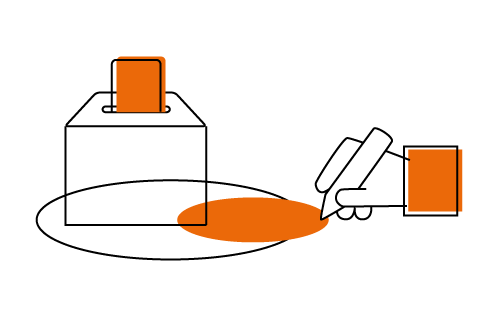
From 20 August, the period begins in which the minister responsible for minority rights must call the regular elections for national minority councils - at the latest by 19 September. The elections themselves must be held by Sunday, 29 November 2026. Members of 22 of the 24 registered councils will be elected, since the election for the Albanian national minority council was conducted in 2023. The elections are organized by the Republic Electoral Commission, while the special voter registers are established by the Ministry for Human and Minority Rights and Social Dialogue.

On 17 July 2026 the Government submitted to the National Assembly a draft Law on the Judicial Academy, with accompanying amendments to the Law on Judges and the Law on Public Prosecution. The package makes a certificate of completed Academy training the mandatory precondition for a first appointment as a judge or prosecutor, confirming the Academy as the single entry point into both professions. It entered procedure a day after the Venice Commission's urgent opinion, which found key recommendations implemented but insisted the legislative process remain transparent and inclusive.

Key Issues

In numbers

Rotating selection of numerical data drawn from CRTA+ monitoring. Quantitative indicators can often reveal patterns, scale, and change more clearly than narrative descriptions alone, helping to illustrate how political and institutional developments unfold over time. The figures shown here reflect different aspects of CRTA+ monitoring and are updated as new data becomes available.
67%
of citizens say governing without parliamentary oversight is unjustified (June 2026)
42%
of citizens favour aligning with the EU vs 30% with Russia (CRTA, June 2026)
87%
of citizens under 30 support the student protests (CRTA, June 2026)
CRTA.Plus is part of CRTA’s work to document developments related to democracy, the rule of law, and accountability in Serbia.
Crta @ 2026. All rights reserved.